Thinking about giving your Victorian-era home a contemporary twist while maintaining its historic charm? Incorporating glass panels into your front door might be the perfect solution. This blend of old-world elegance and modern flair offers various advantages, though it’s not without potential drawbacks. Let’s delve into the pros and cons, helping you make an informed decision suited to your home’s character and your personal preferences.
Introduction to Victorian Front Doors
In the early Victorian era, front doors exuded elegance and grandeur, featuring detailed carvings and robust wooden structures. As time progressed, the integration of glass panels into these doors became a hallmark of Victorian architecture. This evolution didn’t just enhance aesthetics; it also allowed for more light to permeate entrance halls, creating inviting and well-lit foyers.
These glass panels, often stained or led, transformed the mundane into the magnificent. By the late 1830s, larger glass sections had started to embellish the upper halves of doors, showcasing intricate patterns and vibrant colours. These additions were not merely decorative; they were a statement of opulence and sophistication, further accentuated by meticulous craftsmanship.
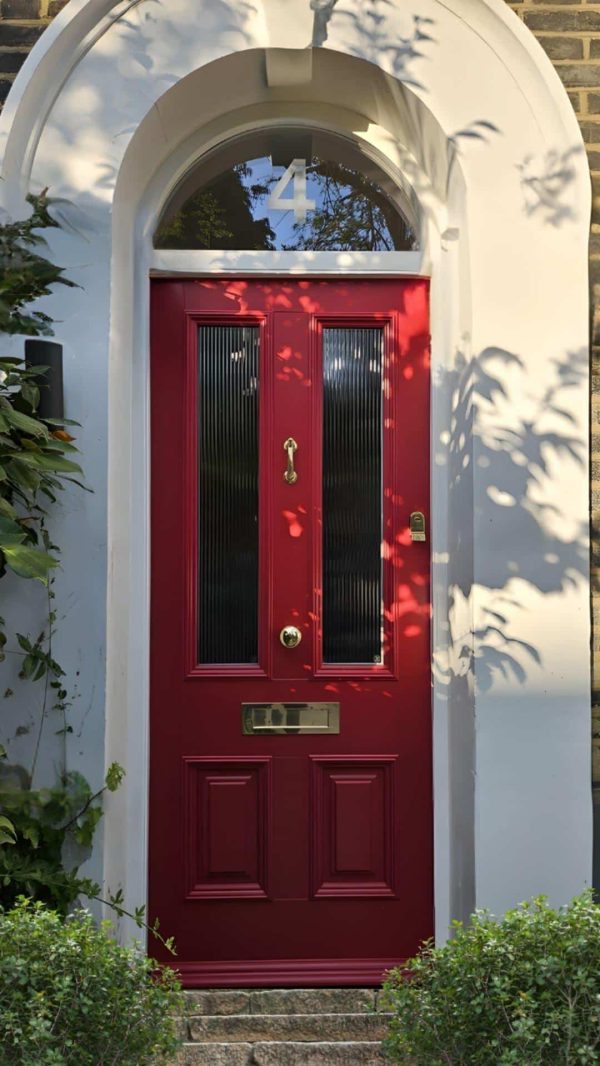
Moreover, the Victorian era’s penchant for detail didn’t stop there. It extended to house numbers, which began appearing engraved on glass panels or crafted in metal, adding a personalised touch to each residence. Gleaming brass fixtures adjoined these doors, polished to perfection, often daily, reflecting the meticulous maintenance by household staff.
Today, incorporating glass panels in Victorian front doors allows homeowners to blend historical charm with contemporary practicality. Engineered hardwood ensures durability, while modern glass manufacturing techniques replicate the exquisite designs of yesteryears. This fusion creates a perfect entryway that honours Victorian traditions while meeting present-day needs.
The Charm of Glass Panels in Victorian Doors
Glass panels in Victorian front doors bestow a magical allure that few other architectural elements can match. From the late 1830s, these panels began to grace homes with their unique blend of artistry and light. The larger glass panels, specifically, enhanced the aesthetic appeal, allowing natural light to flood into the entrance halls, creating a bright and welcoming atmosphere.
The leaded and coloured glass became a prominent feature, transforming the otherwise sombre wooden structures into vibrant and eye-catching masterpieces. These intricate designs often included vivid floral motifs or medieval-themed illustrations, reflecting the popular Gothic Revival and Arts and Crafts movements of the time.
Moreover, the glass panels conveyed a sense of prosperity and taste. Elaborately carved wooden frames surrounded the glass, often matched by gleaming brass door handles and knockers. This combination not only showcased the craftsmanship of the era but also indicated the homeowner’s social status. In many cases, house numbers were elegantly engraved onto the glass panels or attached as polished metal plaques, adding a further touch of sophistication.
The tradition of incorporating stained glass into front doors has endured, with many contemporary homes still choosing to feature these beautiful elements. Using traditional methods and hand-floated glass, modern stained glass panels capture the same timeless elegance seen in Victorian design, proving that the charm of Victorian glass panels is truly timeless.
Improving Natural Light with Glass Panels
One of the standout features of incorporating glass panels into Victorian front doors is the remarkable increase in natural light. These panels, especially when crafted with traditional hand-floated glass, offer an exquisite interplay of light and colour that transforms an entryway. The translucent nature of the glass allows sunlight to permeate through, casting a warm, inviting glow throughout the foyer. It’s not just about light; it’s about creating an ambience that welcomes both guests and residents alike.
This infusion of natural light can make a significant difference in homes that might otherwise feel dark and confined. By allowing more light to enter, glass panels can enhance the sense of space and openness, making your home feel more expansive and cheerful. For lovers of period architecture, maintaining the authenticity of the Victorian style while also modernising the living environment can be a delicate balance. Glass panels offer an elegant solution, marrying historical charm with contemporary needs.
Moreover, the aesthetic benefits do not end there. Stained glass panels, available in a plethora of colours and patterns, add a layer of artistry to your doors. Whether you opt for intricate floral designs reminiscent of the Gothic revival or the medieval motifs favoured during the Arts and Crafts movement, these panels serve as a statement piece, elevating the visual appeal of your front entryway.
Security Concerns: Are Glass Panels Safe?
Security is an essential factor to consider when incorporating glass panels into your Victorian front door. The delicate nature of glass might raise concerns about break-ins, but modern advancements have made it possible to enjoy the beauty of glass without compromising on safety. For instance, you can opt for double-glazing or laminated glass, which offers increased resistance against forced entry compared to single panes.
Moreover, many manufacturers now provide reinforced glass panels designed explicitly for external doors. These reinforced panels typically incorporate multiple layers of glass with an inner layer of polyvinyl butyral (PVB) that holds the glass together even when broken, significantly upgrading the door’s security profile. Choosing such options can help you maintain the classic aesthetics while ensuring your home’s safety.
Another security measure involves the use of sophisticated locking mechanisms. Multi-point locking systems can make a significant difference, as they secure the door at various points, making it considerably harder for intruders to force entry. Additionally, fitting security grilles or wrought iron designs on the interior side of the glass panels can provide an extra layer of protection without detracting from the door’s elegance.
It’s also worth consulting with a security expert to assess other potential vulnerabilities around your entrance and take a holistic approach to securing your home. Balancing the timeless charm of Victorian-style glass panels with modern security solutions allows you to enjoy both beauty and peace of mind.
Energy Efficiency: Do Glass Panels Affect Insulation?
One significant concern for homeowners considering glass panels is their impact on energy efficiency. Unlike solid wooden doors, glass can be more susceptible to heat loss, which can lead to higher energy bills, particularly in colder climates. However, advances in glass technology have made modern glass panels far more energy-efficient than their historical counterparts.
Double Glazing: One effective solution is double glazing, which involves two layers of glass with an insulating layer of gas in between. This design significantly reduces heat transfer, keeping your home warmer during those chilly winter months.
Low-E Glass Coating: Another option is low-E (low emissivity) glass. This type of glass is coated with a fine layer of metal oxide, reflecting heat into the room and helping to maintain a consistent indoor temperature. These technologies ensure you don’t have to sacrifice energy efficiency for those beautifully ornate glass panels.
While older Victorian doors with single-pane glass can be problematic in terms of insulation, these modern solutions provide a viable way to maintain or even enhance your home’s energy efficiency. So, if you’re keen on incorporating glass panels into your Victorian door, it’s possible to keep the draughts at bay without forgoing those charming historical aesthetics.
Privacy Matters: Balancing Transparency and Seclusion
When it comes to privacy, glass panels can be a bit tricky. The very quality that makes them appealing —their transparency—can also be a drawback. You wouldn’t want just anyone peeking in! Fortunately, there are several ways to balance natural light and privacy.
Frosted Glass and Etching
Using frosted glass can be an excellent way to allow light to enter while blocking the view from outside. Etched glass, with its intricate patterns, also serves this dual purpose beautifully. Both options maintain the aesthetic charm while ensuring you can relax without feeling exposed.
Stained Glass
Stained glass is another brilliant option. The colourful designs and textures provide an additional layer of privacy, as it’s nearly impossible to see clearly through these artistic pieces. Plus, they add a historic and elegant touch, tying in seamlessly with the Victorian theme.
Supplemental Curtains and Blinds
If you prefer a more flexible approach, consider adding sheer curtains or blinds. These can be adjusted as needed to let in light during the day and provide seclusion at night. It’s a simple yet effective method to get the best of both worlds.
Ultimately, the key to balancing transparency and seclusion lies in choosing the right type of glass and possibly complementing it with additional measures. With a bit of planning, you can enjoy all the benefits of glass panels without compromising your privacy.
Maintenance and Durability of Glass Panels
When it comes to maintenance, glass panels, especially those that are stained or led, require some attention to keep them looking their best and functioning well. Regular cleaning is vital; however, you’ll need to be gentle to avoid damaging the intricate designs or delicate lead lines. A simple mixture of water and mild soap applied with a soft cloth often does the trick, avoiding any harsh chemicals that could harm the glass or lead.
The durability of glass panels, particularly stained glass, can be surprisingly robust. Modern creations, even those that mimic traditional Victorian methods, often utilise advanced techniques and materials, such as engineered hardwood for the door itself, which enhances the longevity of your door. Additionally, skilled craftsmanship, like that from Stained Glass Recreations, ensures that each piece is made to withstand the test of time, combining artistry with resilience.
However, it’s essential to be aware of possible issues. Over time, the lead cames holding the glass pieces together might weaken, and the vibrant colours of the glass could fade if exposed to constant direct sunlight. Routine inspections can help catch these issues early. If necessary, you might replace individual panels or consult professionals who can recreate almost any design, keeping your door looking as stunning as the day it was installed.
Conclusion: Weighing the Pros and Cons
Incorporating glass panels in Victorian front doors brings a unique blend of aesthetic appeal and functional benefits, but it’s essential to consider both the advantages and drawbacks before making a decision. On the pro side, glass panels significantly enhance the charm of your door, creating an eye-catching feature that can elevate the entire look of your home. They allow natural light to flood your entranceway, creating a warm and welcoming ambience.
However, there are potential downsides to keep in mind. Security concerns often top the list, as glass panels, while beautiful, can be perceived as a weaker point in home defence. Modern advancements in glazing technology, such as using toughened or laminated glass, can mitigate these fears. Energy efficiency is another consideration, as glass has different insulating properties compared to solid wood. Ensuring you choose high-quality, energy-efficient glass can help maintain your home’s thermal comfort.
Privacy is another aspect where glass panels present a challenge—but one that is easily addressed with various design options, such as frosted or stained glass, which offer a balance between light and seclusion. Additionally, the maintenance and durability of glass panels require thoughtful consideration. Stained glass, for instance, whilst stunning and historic, may need more care and expertise to preserve its beauty over the years.
In conclusion, deciding to incorporate glass panels into your Victorian front door is not merely a question of style. It involves weighing the practicalities, from security and energy efficiency to privacy and upkeep. By carefully considering these factors, you can make an informed choice that complements your home’s heritage while meeting your modern needs.